On October 23-25, 2009, I attended Necronomicon, the Tampa/St. Petersburg area's science fiction/fantasy/horror convention. Thanks again to coordinator Ann Morris and volunteers for a fabulous event!
At my table I had: 1. IPPY Silver Medal-winner Riffing on Strings: Creative Writing Inspired by String Theory (Scriblerus Press), which contains my story "Arachne." 2. Bram Stoker Award-winner Unspeakable Horror: From the Shadows of the Closet (Dark Scribe Press), which contains my story "Memento Mori." 3. Hugo Award-winner Electric Velocipede, which contains my story "Hermit Crabs." ("Hermit Crabs" is also on the recommended reading list in The Year's Best Science Fiction, 26th Annual Edition.) 4. October/November 2009 issue of Asimov's, which contains my novelette "Flotsam" and poem "Derivative Work." 5. The first edition of Deviations: Covenant (Aisling Press). 6. CDs containing e-books of Covenant and its sequel, Appetite (books are also available for free download here). 7. Brochures for Broad Universe. 8. Flyers for the Science Fiction Poetry Association.
I was also on four panels: "Chasing Dreams: How I Came to be a Writer" (moderating, with guests of honor Catherine Asaro, Patricia Briggs, and Richard Lee Byers); "What is Art's Place in Society?"; "E-Book formats & DRM Methods;" and "Genre Jumping, Round Two."
More photos follow (continued...).
I didn't get shots of all the tables in Author Alley, but here are a few:
K.L. Nappier had the sales table to my left, with her novels Full Wolf Moon and its sequel Bitten, along with several Twisted Tails anthologies. You can catch K.L.'s interview on Studio 10 here. Thanks to Kathy and her husband Richard for their marvelous hospitality during the conference!
Stokely Gittens' table was across from mine, with his novel Peter Paul: The Chase Begins."
Chris Jackson was selling copies of his books Weapon of Flesh, Death Mask, and more. You can read his con report here.
William Hatfield's table was to my right, with copies of Captive Audience.
Lakisha Spletzer, here attending her first SF convention, speaks with voice actor Jeffrey Breslauer. You can read her convention report for Saturday and Sunday.
The convention's freebie table includes materials about my Deviations series. I also put out brochures from Broad Universe.
A peek inside the gaming room.
Roving musicians.
Costumes...
Ann Morris stands at right. Costumes in this shot are in keeping with this year's theme of "Asylum." Says the program book, "There are many examples of mass hysteria where large groups of people profess to see wildly fantastic things. But nowhere else is there a case where dozens of people, all of whom work on the same SF convention, go insane at the same time."
Vol. 1, Deviations: Covenant (2nd Ed.) Vol. 2, Deviations: Appetite Free downloads of both volumes here.
Go to Manybooks.net to access Covenant and Appetite in even more formats!
The library held its Halloween Horrorfest on October 29. I gave readings, answered questions, and did book signings along with Belea Keeney (at left, outfitted as Tippi Hedren's character in Hitchcock's The Birds) and K.L. Nappier (next to Belea). I'm third from the left, followed by Citrus County Library director Flossie Benton Rogers.
I hadn't dressed in costume for about 25 years and hadn't worn makeup for almost that long, so arrived at the Homosassa Library early to practice. This self-portrait comes courtesy of the library's bathroom mirror.
My nails, painted the night before, survived a full night's sleep and some heavy-duty typing that morning, but my left thumbnail paint chipped when I tried to remove the safety seal on my purple lipstick. Fortunately, I'd brought the polish with me for any needed touch-ups.
My hair has thinned considerably over the years, but I could still create some witchy frizz by setting my washed hair in many tiny braids overnight, unbraiding, and brushing vigorously. I uploaded this shot about an hour before the event, using the library's WiFi. It got me a few stares, and a couple of people didn't recognize me -- but when a toddler smiled, waved, and called, "Hi!" I concluded I wasn't very frightening.
Usually I look as I do in this flyer for the event, minus the orange tint:
The library's book display included general writing guides and guides to writing horror.
Back on the 19th, I joined Loretta Rogers and Belea for the library's NaNoWriMo Kickoff at its Lakes Region/Inverness branch:
Photo credit here and below: Karen Slaska of the Citrus County Library System.
Belea spoke about creating a setting, Loretta spoke about genre and establishing story components, and I spoke about social networking for writers. An online version of my handout, with live links, is here.
Thanks to Flossie, Jim, Karen, Susan Mutschler, the fabulous folks who decorated the Homosassa community room, the staffs at Homosassa and Inverness, and all our attendees for a couple of great events! Belea, Loretta, and I will team up at the library again -- this time at the Central Ridge branch -- on November 13 for the "Write-In," the second of our three-part NaNoWriMo series.
Vol. 1, Deviations: Covenant (2nd Ed.) Vol. 2, Deviations: Appetite Free downloads of both volumes here.
Go to Manybooks.net to access Covenant and Appetite in even more formats!
Thanks to Cyrus and to my fellow panelists for a great show! You can hear it here.
Transcript follows... (continued)
WEBB: Welcome to Conversations LIVE!, where we connect you with the artists and authors you love, who bring you the music and books you can't get enough of. I'm your host, Cyrus Webb, and first of all I say a big "thank you" to our affiliates in 90.1 FM. Also at 92.3 FM for carrying the broadcast for us. Also for those listening to us online, through BlogTalkRadio.com, ConversationsLIVEradio.com, either through the switchboard or the podcast. We welcome you to the show as well. This is our monthly show that I always look forward to, because I get so much out of it and I know our listeners do as well. That is the business of books. We actually talk to a panel of authors who have not only gone through the publishing process, but also the marketing process. And now that they're experts at it, they can share with you how they've gotten to the point where they are, and hopefully help you all with some of the advice they're going to give. We have a great panel of authors joining us today, all of which have been on the program before, with the exception of one, and we're very glad to have him with us. We have Brian Rathbone with us for the first time. We also have coming back to us Rhonda Carpenter, Elissa Malcohn is back with us, Arlene Radasky, and our good friend Mark Eller. So we want to say first of all a big welcome to our panel. Hello, authors.
[Authors say hello.]
WEBB: First of all, it's great to have you all back. For those who are just hearing about you for the first time, we want to of course do our introductions. But to be polite, I am from the South, want to start with Brian. It's his first time on the broadcast. Brian, why don't you tell our listeners a little bit about yourself?
RATHBONE: Well, thank you, Cyrus. I appreciate the warm welcome, and hello everybody. I'm Brian Rathbone. I'm the author of the Dawning of Power fantasy trilogy. And I'm also the narrator of the free podcast version of the trilogy. I'm really glad to be here and looking forward to a great conversation.
WEBB: All right. Well, thank you. Elissa, it's great to have you back. Why don't you go ahead and reintroduce yourself to our listeners.
MALCOHN: All right. Thanks for having me back on the show. I write across genres, but in terms of today's show, I first was published during the 1970s in the small press, and sold to Asimov's in the 1980s. Was a finalist for the 1985 John W. Campbell Award. And I've just again had fiction and poetry published in the October/November 2009 Asimov's. I also have my Deviations series. The first two books are out as free downloads. The first volume had been published in the small press, and now I'm offering them as downloads from my website and elsewhere. And that series is going to continue on for a while.
WEBB: Okay. Again, we're very glad to have you back with us, Elissa. Also joining us is Rhonda Carpenter, who also has her own show, that I was privileged enough to be on. And she's actually interviewed, I think, most of the authors with us today. Rhonda, why don't you go ahead and reintroduce yourself to our listeners? [connection problematic] We'll pick back up with Rhonda and we'll go to Arlene. Arlene, why don't you go ahead and do your introduction?
RADASKY: My name is Arlene Radasky, and I've written a fantasy historical novel. That's the genre that they tend to put it in, although I would prefer to call it just a historical novel. The novel is my first novel, and it's available so many different ways. It's free on my web. There are other available sites listed on my website that have it free. It's also available on Amazon.com. And it's a novel that was in my heart for many years, and I'm just so glad to be able to present it and get it out so that people can read it. It's called The Fox.
WEBB: All right. Of course, Arlene, it's great to have you back with us. And last, but certainly not least, our good friend Mark Eller. Mark, [I'm] glad to have you with us. Why don't you go ahead and reintroduce yourself to our listeners?
ELLER: All right-y. First, I'm Mark Eller, and the first thing I want to say is I read The Fox, and it's a really good book. And second of all, I'm author of Traitor, book one of The Turner Chronicles. In a two-year period I've landed seven book contracts with Swimming Kangaroo Books. I have three audio fiction podcasts out there, Mercy Bend, The Hellhole Tavern, and on Podiobooks I have Traitor. And I've written several short stories that have been published in the last couple of years, and I am also very proud and pleased to be here.
WEBB: All right. Well, thank you, Mark. It's great to have you with us. And I think we now have Rhonda back with us. Rhonda, can you hear us?
CARPENTER: I can hear you.
WEBB: All right. Great. Rhonda, why don't you go ahead and reintroduce yourself to our listeners?
CARPENTER: Okay. Awesome. I'm Rhonda R. Carpenter. I'm the author of The Mark of a Druid, and it is a trilogy series. Book two due out some time late March. I'm also a Podiobooks.com author, and as you know I have a Blog Talk Radio show for PodioRacket.
WEBB: Exactly. Well, again, it's great to have the five of you here. I think you all are the perfect ones to be able to discuss the business side of what you do. And it's quite interesting. We've never done this before with a genre in mind. The reason why I wanted to do this is because I've been getting so many books lately either from different publishers or individuals submitting, that write within either a sci-fi or fantasy genre. So I guess my first question would be, starting with Elissa and then we'll go around the table here, is, how did you choose this genre? Or did this genre rightly choose you?
MALCOHN: The genre, in terms of fiction, the science fiction-fantasy genre definitely chose me. I was enamored of the original Star Trek series. I was a trekkie from the very beginning. When the show went off the air in '69, I missed it so much I started writing my own adventures, and then started writing science fiction, branching out into short stories. And that's what I started submitting, was short stories, and also poetry that was mainly mainstream, though some mythological. Then I got involved with the Science Fiction Poetry Association. And so, I've been publishing science fiction and speculative poetry as well. Even back when I was a toddler, I watched the original Outer Limits, so that kind of primed me for the whole genre.
WEBB: Wow. Okay. All right. I'm going to use the same question for you, Brian. What came first for you? Did this genre choose you, or did you choose it, and why?
RATHBONE: I would have to say that fantasy and speculative fiction in general really did choose me. The first book that ever grabbed me was A Wrinkle in Time, which was just great "what if?" and escapism and the ability to go someplace else. Couple that with the fact that I grew up training racehorses on a farm, where life kind of seemed like it might have been a hundred years ago. That really gave me an interesting perspective on the fantasy genre, and I've just always had a love for it.
WEBB: All right. Same question goes to you, Arlene.
RADASKY: Well, I started out writing a historical book, and I wanted to bring the modern world into it. And I also wanted to have them connected as far as families, the modern and the ancient people in my book. All of a sudden the idea came to me that they could actually have what I call mind-melding. I don't have the back and forth time travel that some of my types of books do. But the fantasy kind of chose me in this situation. I didn't start out writing this way. But I have been fascinated by that type of genre forever. Again, A Wrinkle in Time is one of my favorite books. Twilight Zone, Battlestar Galactica, Star Wars, all of that has been very much of a favorite of mine. So maybe I just kind of eased into it easily with my books.
WEBB: Okay. All right. And Mark, for you, how did it come about? Did it choose you or you chose it?
ELLER: It definitely chose me. I started reading science fiction when I was about 12 years old. Once again, A Wrinkle in Time was one of those big ones. But it was probably The Hobbit, when I read it in seventh grade, that really caught me and kept me there. And then the Lord of the Rings trilogy. And after that I just couldn't get away.
WEBB: And last but certainly not least, Rhonda, what about for you?
CARPENTER: Oh, it chose me. I started out writing historical fiction, and then realized, after speaking to several publishers, that unfortunately my historical fiction they considered fantasy. [Laughs] It's true. I mean, I really, this book, because its story line chose me. It came to me in the middle of the night in a dream, and kind of developed from there. And I didn't realize I was writing fantasy until I started submitting to publishers.
WEBB: Wow. And so, I want to stay with you then, Rhonda, and leading off as a segue question then, when you think about the genre, was there any concern that this is a book that, yes, you might enjoy writing, but that it may not be something that people wanted to read?
CARPENTER: No; I don't think as writers we can ever really set aside that our book isn't going to be for everybody. Books are like people, and you're going to get along with some and you're not going to get along with others. And I think that I don't take for granted that a new reader picking me up, whether they've heard it on Podiobooks or whether they're reading it in text or in e-book format, I never know what their response is going to be. And I'm always willing to hear all of their responses.
WEBB: Okay. Elissa, the same question goes to you. I mean, was there that concern that maybe, even though you might find a genre that you enjoy, that this is not a genre that readers would be looking for?
MALCOHN: It doesn't even enter into my mind when I'm writing, because when I write a story, the story chooses me. I kind of write the type of stuff that I enjoy reading. A story comes to me as a challenge, and then once I finish it I have to see if an editor likes it, and then if a reader likes it. And yes, different people respond differently. Some people like my material and some don't, and so with that in mind, I choose to write the kind of stuff that I like to read and that interests me.
WEBB: Okay. Mark, the same question goes to you.
ELLER: I write for myself. I sit around all day long. I imagine things. I picture things in my mind, create scenes, and then it takes me over. I sit down and I start writing, just because that's what I enjoy doing. On the Turner novels, I thought about that for five years before I actually sat down and started writing them. And even then, I knew what I wanted for the ending. I knew what I wanted at the beginning. And the middle was the characters taking over the book for themselves.
WEBB: All right. And Arlene, for you?
RADASKY: The story was something that I just had to get out. There was no way that I could get around it. I was not going to be able to do anything else until I sat down and started writing this. I didn't think about who was going to read it. Now I understand that there are certain types of people, again as Rhonda said, that are going to enjoy it and others won't even read it. But I'm just so happy that it's out there, and anyone that would like to take a look at it can. So I don't write for people. It's actually for me.
WEBB: Okay. And last but certainly not least, Brian, the same question goes to you.
RATHBONE: You know, it's been interesting listening to what everyone else had to say. I kind of had a similar experience when I was writing the book. I wrote the book first for me, and when I got to the point that I realized I had something that I thought was pretty good, I took it to an editor and then tried to craft it for the rest of the world. And it wasn't until I got to the marketing part, when I wanted to go out and sell to different people, that I saw that there was a bit of a genre bias, where I think just the language of the word "fantasy" sometimes can put off people that aren't necessarily, that haven't been exposed to the genre. And perhaps it brings images to their mind that aren't really accurate to what your work is like, because speculative fiction is so broad, fantasy is so broad, that it's difficult sometimes to communicate to non-genre readers what your book's about.
WEBB: Exactly. Great point. And actually, Brian, you gave us a great segue. We're going to take a musical break here. When we come back from the break, we're going to talk about the marketing aspect, and also about another thing that I got an e-mail about, and that's cliques. I know that with every group of writers, whether it's in different states or in different genres, there are some that seem to cling to each other. Others are kind of left on the outside. We're going to talk about that, how you all have dealt with being able to be a part of a community. Also, we want to talk from the gender aspect. Is there a different, in the way that female writers in the science fiction genre are treated, versus the male writers in the genre? We're going to talk about all that when we come back from the break. Okay, authors?
[Authors agree.]
WEBB: All right. I want everyone to please stay with us. This musical break is actually coming to us from our friends at 92.3 out of Arkansas. Now, next month on our broadcast, thanks to our good friends at Bravo, we're going to be interviewing the cast from Season One of their show Step It Up And Dance. One of the first that will be coming on our broadcast is Michael Silas. Now, I'm bringing him up because Michael Silas actually performed with the guest that's going to be performing during our musical break here, Lady Gaga. If you watched the VMAs this year, she gave a great performance and he was actually one of her dancers. Here she is performing probably one of my favorite songs, her "Paparazzi." We'll be right back with more Conversations LIVE!
[Lady Gaga performs "Paparazzi"]
WEBB: There you have Lady Gaga with "Paparazzi." Again, to make the connection, Michael Silas, who danced with her for the VMAs for 2009, will be on our broadcast in November. Visit ConversationsLIVEradio.com for the dates and times of that interview. We're back with our special panel for this month. "The Business of Books" is what we're talking about. We have a great panel of authors that are joining us. We have authors Mark Eller; also Brian Rathbone, Rhonda Carpenter is with us; Arlene Radasky and Elissa Malcohn are all joining us as well to discuss this topic. Now, before we left, I said when we came back, Brian had given us a great segue in talking about marketing. I think that's something that all of us have dealt with in one aspect or another. When it comes to genre, though, I want to start with Elissa on this, did you find it difficult to be able to break into the market? Or did you find it difficult to be able to find your voice in your particular genre?
MALCOHN: For me that's kind of a trick question because I started very young. And starting young, I took longer, probably, than a lot of other people to get to the point where I was published. My first story publication in the small press came in 1977. I'd been submitting since the early 70s. And I didn't break into the larger press, that being Asimov's, until '84, and did not have my first novel published until 2007. So really, for me, it was a question of learning my craft and getting my stories to the point where I could get a publication interested in them. Now that said, stories of mine have come out and been recognized, that have been rejected multiple times, and that has more to do with the fact that different magazines have different niches.
WEBB: Right.
MALCOHN: So, for example, my story "Hermit Crabs," which appeared in Electric Velocipede -- Electric Velocipede won the Hugo earlier this year, and "Hermit Crabs" is on the recommended reading list in The Year's Best Science Fiction, 26th Annual Edition -- Electric Velocipede took that story after it was already rejected five times.
WEBB: Wow.
MALCOHN: So that speaks to the importance of perseverance.
WEBB: Exactly. Great point. Rhonda, why don't you pick up there? Was it difficult for you, once you knew what you wanted to do? And I think you all have pretty much said in a consensus that you write first for yourself. But this is a business, so was it difficult for you to be able to break into the market?
CARPENTER: I think that in my case, it wasn't as difficult as it could have been. I did shop major houses and heard all the same things from them. And where they all seemed to hang up was not my story, not my style, not the presentation of the book, but it was they didn't know how to market what I as was presenting. And that's why I chose to go Podiobooks, and the direction I went with the print version, so that I could let the readers decide. And they certainly decided, and they've decided for me. And I love that.
WEBB: And I guess, Rhonda, I guess as they would say, the rest is history there.
CARPENTER: Yeah.
WEBB: Mark, what about for you?
ELLER: Well, I went the route of trying to get an agent, trying to get big houses interested in me, and I kept hearing that, "You really shouldn't have written a trilogy first. You should have written a single book." But, you know, I like trilogies, so I'd written one. So since I couldn't get them interested, I went the multiple route of hitting the small press publishers and releasing one of my series out as a podcast, God Wars, and put out The Turner Chronicles to the small press. And really, the second small press I contacted loved it and accepted it. And that took off to them signing me up for the seven book contracts for my two different series. And I continued on with the podcasting because that got me more media attention, and got me a lot of response from listeners. And a number of them ended up buying the books.
WEBB: Arlene, the same question goes to you.
RADASKY: Actually, I did also try to market my book to several large publishers, and found out that the genre was really something that they weren't looking for. As we all know now, it seems to be more of a vampire world. But I decided at that point that my main goal was to let people read it. And so, Podiobooks.com was one of the first ways that I decided to give it away, and I've also got other platforms that I'm giving it away. And from there, I've increased sales. I went through Book Surge to publish it myself. It's available on Amazon and Smashwords and a few other places. I have apps for iPhones and iTouches that people can pay for. And through being able to give it away in several different forms, the sales have started increasing, because more and more people are becoming aware of it.
WEBB: Right. Brian, the same question goes to you.
RATHBONE: Well, it was interesting. I queried my top agents after I had my book written, because I got the book finished and I thought, "Well, what now?" I really, it took a lot of research and looking for me to figure out what the proper channels were to get published and get into the large press world. And I queried my top agents, got a couple form rejection letters back, and really sat down and thought about it long and hard and realized I wasn't a very good business case for a prospective agent, in that nobody really knew who I was. I didn't have a fan base. I didn't have really numbers to bring to that agent and say, "Here's what my sales look like. Here's what my audience looks like." So I took that and said, "You know what? I'm going to create my own press. I'm going to self-publish this in a very traditional sense. I'm going to print books. I'm going to attack the digital market." And I ended up coming a little bit late to the game, to the Podiobooks market. A lot of people start at Podiobooks and then go to print. I kind of did the opposite, where I went to print and then went to Podiobooks, and really from there it's been an adventure in marketing and generating exposure in ways that are attractive to my prospective audience.
WEBB: Mark, I give you a lot of credit for introducing me to a variety of authors that I've had a chance, now, to be able to talk with and also to work with. If it had not been for you, I probably wouldn't have met Arlene or Rhonda when I did. And I bring that up because several of you have mentioned the importance of Podiobooks and the podcast. Scott Sigler, who's another author, whom I met through you, Mark, has also found a lot of success there. My question, Mark, is, do you think that the audio versions, that that has been a way to catch people's attention? One, because primarily, I think for most of you it is free; but two, people can pretty much listen as someone else reads instead of having to stop what they're doing and read.
ELLER: Well, yeah, it's perfect for people riding to work in their cars. I was working an assembly line for a while and listening to Podiobooks on my iPod and got a lot of other people involved in it. And I think going through Podiobooks and other podcasts was a very good marketing ploy. Some of us have had better success than others, but you mention Scott Sigler. And he came up with the first podcast-only book, and he has utilized it so tremendously that he's had millions of downloads of his books. And jumped from that into publication and became a New York Times bestselling author. So if it's done properly, the pathway of using podcasts can be a tremendous boon.
WEBB: Right. And we want to give a quick plug to Rhonda. Rhonda had a great interview with him not too long ago. So, Rhonda, we'll move on to you then. You are another one who has been really busy using the power of the voice in getting the word out about your books. How do you feel like that has helped you in building your audience?
CARPENTER: Oh, I don't think I'd have an audience if it wasn't for the audio version of the book, because who's going to know me? I'm a chick on a mountain at six thousand feet in southern California. I mean, seriously, I don't have a following. I'm a writer. I write. So it's not like I'm out there meeting and greeting all the time. But the Podiobooks.com community has given me a voice. And then, when I finished podcasting, I joined forces with Heather Roulo, who is another Podiobooks.com author, the author of Fractured Horizon, and she and I put together this thing called PodioRacket.com, where we plug the other authors on Podiobooks. And we give them a voice in podcast form. And the show has gone over huge.
WEBB: Right. Exactly. Brian, the same question goes to you. I mean, do you feel as though there would be the success that you've had with your series if it was not for the power of the voice and podcasting and also Podiobooks?
RATHBONE: I think that because of my experience, because of the fact that I went out in print first, and into the e-book market so heavily, and I had a good six to eight months head start, that I had seen success in the print market. A lot of success, more success than I expected, in the e-book market. And when I came and released my Podiobooks version, it just increased that and took it to the next level. So I'm very glad to say that it is possible to do it outside of the audio, but the audio definitely takes it to a new level and really gets it out to a lot of people. And you can't overlook the fact that it's a worldwide audience.
WEBB: Exactly. Now, Elissa, for you, and you can correct me if I'm wrong on this, you didn't start off doing the Podiobooks or the podcast, correct?
MALCOHN: Right. I haven't gotten to that point yet, probably because I have a cat right now who can be very noisy at times. [Laughs] And second, I'm actually trained in voice-overs, but reading my own material, I really have to rehearse it for quite a while, because I can easily get emotionally overwrought, and that would cut into the quality of the recording itself.
WEBB: And Arlene, I know you've done a commercial for one of our supporters here, Aqua Notes, and so I know you've been very busy also with the podcasting and the Podiobooks. How has that enhanced our help to you in building your audience and your brand?
RADASKY: Well, first of all it's introduced me to a community that I didn't even know existed. And it's taught me so much. I had to basically learn another language, become familiar with the equipment, just to do the recording. The community itself in Podiobooks.com is incredible and very, very helpful through that whole process. The audience is amazing, and it just keeps growing every day. We have over 300 books there. It's a huge collection. And there's a genre that would be available for anyone of any type of listener. To be in that type of a community, I think, is wonderful, because it really does open up the world. Now I also had it available as an e-book in many different forms, and that's where my largest actual readers have come from. It's one of the free sites that I had people from all over the world come to and read my book. So being able to have both of those available has just made me aware of the readers in the world and made my book available to them. And I just want to mention to Elissa that she ought to go in and listen to some of those books, because becoming over-excited while you're reading is actually a dramatization. That's very exciting and it's a wonderful way to get your book out into the public. Create some excitement while you're reading it. Create different voices. And just really have fun with it. That's what most of us are doing with Podiobooks.
MALCOHN: Great. Thanks.
WEBB: It is 31 minutes past the hour. Again, you're listening to Conversations LIVE! -- our monthly segment, "The Business of Books." We're joined by authors Elissa Malcohn, Rhonda Carpenter, Brian Rathbone is with us, Arlene Radasky, and also Mark Eller, discussing the business of books, and also the business and marketing side of what they do. Now, you mentioned this community, and we've all talked about this community and this genre. It is going to be, with any group there's going to be some, we'll call them technical difficulties. There will be maybe individuals who don't get along as well with other individuals. I don't mean they hate them. They may just not get along as well. There are some who are drawn more to others. I want to talk to Mark first, and then I'll go to Brian on this, and then we'll go through the rest of the group. Mark, have you found that for the most part, that those that you have been connecting with in your genre, and in what you do, if it's outside the genre, even with Podiobooks, that is a closely-knit group, that is not only there for networking but also for support?
ELLER: You know, I have. One of the things I was warned about way early on is that I was told there was a certain jealousy among authors and stuff like that. But I have not seen that. Everybody I have worked with has been more than happy to share their resources. They've been more than happy to offer advice. They've been more than happy to help promote me and my books, the same way I'm happy to promote theirs. That's outside the Podiobooks realm and inside. I met a lot of really great authors in Second Life. Michael Stackpole has office hours that he holds there weekly to teach people about writing. And I met some of my good friends there. And once again, at Podiobooks, I met several good friends, including people here.
WEBB: All right. Brian?
RATHBONE: Well, I have to say that when you're writing a book it's easy to look at other authors as competition. But I think after you get your first book finished, and people have gotten it into their hands, and everybody wants to know when the next one's going to be ready, you realize that there's just absolutely no way as a writer you can satisfy the appetites of your readers. And you start to realize that all those people you might have thought were competition are really just other people in the same boat that you are in. And I found one of the best ways to network and gain followers and bring people in and share information is to promote others. And that's something I think that -- you see that on Podiobooks, but you also see a lot of that on Twitter. We haven't mentioned Twitter yet tonight, and it's something that I've been working on for about six months and following so many people in the fantasy genre and the publishing industry, and there really is this huge community of thousands and thousands of readers and writers and publishers that are all helping each other. And it's really a nice thing to see.
WEBB: Exactly. We want to go next to Rhonda. Rhonda was very gracious to join us. She actually, she's getting ready for her own show that will be going live in just a little while. Rhonda, we appreciate your being with us, but I want to ask you the same question about the community. About not only being there for networking, but also support. What's been your experience?
CARPENTER: My experience is that the people who are out there podcasting and hitting writers' conferences, for the most part, are absolutely gracious and easy, willing to help. They will offer up their services. They will help you edit. They will lend their voice to your podcast. They're very kind and gracious, and grateful for any help that you give them back. I have not found it to be this butting heads community that you might think it would be, with all these egos running around.
WEBB: Okay. And that's great to hear. Rhonda, thank you again for being with us. We know you're going to have to leave us.
CARPENTER: Yeah.
WEBB: But we appreciate you, and go ahead and let our listeners know, before you leave, when they can catch your show.
CARPENTER: Okay. You can catch BlogTalkRadio.com/PodioRacket at 6 o'clock. Tonight we're interviewing another author, named A.P. Stevens. And a very interesting book; I'm excited about it. And you can catch my stuff at TheMarkofaDruid.com. And thanks so much for having me, Cyrus.
WEBB: No problem, Rhonda. Have a great show tonight.
CARPENTER: Okay.
WEBB: We're going to continue on with Arlene. Arlene, the same question to you about, what's been your experience about the community that is out there? Not only online but off. Have you found it to be not only for networking, but also support?
RADASKY: I have had quite a bit of support that I didn't know was here. One of the very first things that I did when I started writing was become part of a writer's forum. We were all very beginning writers and we had joined together so that we could read each other's work and create suggestions, so that we could find out what we could do to make our books even better. And that was just the start of all of the support. As I finished the book and came out into this world, I really gained the confidence to be able to all myself a writer, because of all the people that have surrounded me and helped me through the process of not only publishing my books through Book Surge or putting it on Podiobooks.com, or putting it into the sites that are offering it in many different forms. Everyone has been so helpful. Now, I don't know if Stephen King would be able to e-mail me and answer some of my questions. He's probably pretty busy. But I think even he would come up with some time to be able to help those of us who are brand new writers in this genre.
WEBB: I tend to agree with that. I think that's the case, too, Arlene. And Elissa, the same question goes to you.
MALCOHN: Okay. I've gotten a lot of help from critique groups. I joined my first one when I lived in New York, my second when I lived in Boston, and I'm part of one here in Florida, in addition to people close by. And I also do events -- I did one this past Monday, with other local authors. Our local library is very supportive of local authors, and they put us together with readers and with aspiring writers. And we really form a great network there. But I'm also going to give a plug for three online groups, and they are each geared toward different segments. The one I interact with the most is called Broad Universe, and that was established to support and promote the works of women writers in science fiction, fantasy, and horror. The second group is the Carl Brandon Society, which does the same thing for writers who are people of color and promoting characters, the representation of characters of color. And the third, which is the most recent -- they just formed within the past couple of months -- is called Outer Alliance, and they do the same thing promoting a gay, lesbian, bisexual, transgender presence among authors and character representations as well. And so those are three specific segment networks, but they offer a lot of support within those groups. Just to give you an example, at this very moment, and Broad Universe does this maybe a couple times a year, they have a forum on Yahoo. Anyone can read the forum; you have to be a member to post anything, but it's open to anyone to read, and they are right now holding what's called a Mailing Party, where we all send out any kind of submission, encourage each other along the way. And it's a wonderful way not only to get support, but to learn about new markets as well. They also have a very strong convention presence.
WEBB: Wow. Okay. Elissa, we're going to stay with you as we begin this next segment. And then I want to say again to all of you, this has been a great conversation. I think there's no way that anyone that's listening would not be able to get something to be able to take from it, whether they want to be a writer or not. I think just in building a career and building a brand, I think the information you all are giving is so important. But, Elissa, staying with you, I want to talk about social networking. Brian hit on it during his last discussion of the last question. But when you come to these sites, like Twitter, MySpace, Facebook, Linked In, and others, and in the forums like you were mentioning, how important is it to fully utilize those sites? I mean, to really get involved in all of them, in trying to attract not only those that might be interested in your product, but also those who you just might want to know as far as networking is concerned?
MALCOHN: First, I'm going to say the timing is perfect that you asked me that question, because this past Monday at the library I gave a presentation on online social networking for writers. I am very involved mostly in Facebook and Twitter. MySpace to some degree but not quite as much. And a whole slew of forums. And what I'm going to do is just make a little plug. I took my handout, which has all sorts of links in it, and created an online version so that anyone who is interested can go to my website. There's a link on my home page that says, "Social networking for writers." Click on that link and you'll get a whole bunch of material that you can use. I'm just going to spell out my name. It's E-l-i-s-s-a M-a-l-c-o-h-n. Because my web site is through Earthlink basic and it's a mile-long with a tilde in it. So if you do a web search on my name or on "Malcohn's World," my website will come right up there. Just as an example, Maria Schneider has a blog called Editor Unleashed, and on that blog, not only does she have a whole slew of writing advice, but she posted the story of a man who sold his book through Twitter. He's outside the genre, but this is just an example where he posted -- his name is Matt Stewart, and he struck a book deal with a publisher called Soft Skill by tweeting his debut novel, The French Revolution. So you never know what these social networking sites will produce.
WEBB: Right.
MALCOHN: There are all sorts of chats for writers. There are guides on how writers can use Twitter and how they can use Facebook. Debbie Ridpath Ohi, who tweets under the name inkyelbows, has posted a Twitter Guide for Writers. And there are all sorts of social media guides geared toward educating writers on how best to use these sites. Mashable, the Social Media Guide, posted "Literary Tweets: 100+ of the Best Authors on Twitter." So just, I've just gathered all of this and a whole bunch of blogs and Twitter accounts, etc., on this handout, which is now live on my site.
WEBB: All right. So we'll make sure to let people know again at the end of the broadcast, Elissa, so make sure you keep that in mind. Arlene, what about for you? How have social networking tools -- I know you're like me when it comes to Twitter, but what about some of the other sites? How have they helped you in being able to market and promote yourself?
RADASKY: Well, one of the things that I just recently, the sites that I've just recently joined, have actually become more active in, is Goodreads. Goodreads is a site for authors as well as readers, to be able to go and find out which books are more popular in that community. You can become friends with all of the different people there and find out through them what types of books they would like to read and promote your book. So it's another place that we can actually reach out and touch people that we wouldn't otherwise have a chance to do. And of course, Twitter; I think Twitter's very, very important. And I think it's important to be able to talk to the people and become friends with the people. It's not just a place to be able to gain a number of followers and see if you can beat someone else with the number of followers that you have. I think it's a community. And the more you do as a part of that community, the more people will actually come to you and read what you have to say and maybe go to your site and find out who you are. Facebook has been another place that I've really enjoyed being a part of. I do have a MySpace page, but quite a while ago I gave up going there. It just isn't what I was comfortable with. And I'm looking for other places, too. So, with Elissa, she's offered me several different sites that I'll go look at, Broad Universe and others. I try to get involved as much as possible in these sites, because you just meet a lot more people that you can learn from, and they can learn from you.
WEBB: Exactly. And Mark, what about you? How has social networking made a difference in the way you market and promote yourself?
ELLER: Well, you know, Facebook and Twitter's been mentioned a lot, and MySpace, which I also quit using. So I'm going to go back again into the sim game Second Life. A friend -- he's a friend now, he was originally a fan -- talked me into visiting Second Life, and once I got there I found a massive writer's community inside there. I already mentioned Michael Stackpole. I started visiting places where writers did live readings. I started doing my own live readings there. That led to me getting published in a magazine, eight different times in the same magazine, because an editor approached me after hearing me and asked me to please submit to her magazine. It also got me a lot of connections with people who were in the podcasting world, in the magazine world. I've met editors, I've met poets, and had a great experience in there.
WEBB: And last, but not least, Brian, what about you?
RATHBONE: Well, we've talked a little bit about Twitter, and one of the things that I've done is actually create a thing called the Twitter Fantasy List, where I actually collected the Twitter accounts for all fantasy authors, publishers, podcasters, all in one page, so that fantasy fans can find their favorite speculative fiction author on Twitter, connect with them, and really have a conversation with them. And that's been one of the really great draws to my website, and it's allowed me to connect with a lot of these authors and start conversations with them. So that's something I've done. It's been a lot of fun. And I also want to touch on what Arlene was saying with Goodreads. There's a couple other sites out there that are similar: Shelfari, aNobii, Library Thing is another. And those are great ways to connect with readers and other writers. And one of the tools that I use from Shelfari is to actually show my bookshelf on my About page on my website, so that prospective readers can see what my influences were.
WEBB: Oh. Good point. And I think, for me at least, there's so many, so many. And you were mentioning some of these, like Goodreads, Shelfari. I have those, signed up for those, and you have so many sites that you try to maintain. It's really hard to go to them all. To keep them updated on a regular basis. But I think it is great, because you never know who you might reach in one location that you would not reach in another. So I think all of those are great to share. Again, you've been listening to our great panel. Elissa Malcohn. Rhonda Carpenter had to leave us; she's getting ready for her show, PodioRacket. But we have Brian Rathbone with us, Arlene Radasky, and also Mark Eller with us, all talking about the business of books and how you can go about applying the things that they've done in their lives to help you be a success in your particular business or your craft. Authors, this conversation has been great. I really, really do appreciate it. What I'd like to do is go around the table if we can, and I want you to be able to give out your website. And when you do that, I want you to also give out your advice for those that might not be living their dream, but that you want to pretty much encourage to start living their dream today. We're going to start with you, Brian. Again, it's great to finally get a chance to talk with you. I really enjoyed your book The Dawning of Power. And so, I really appreciate your being a part of this discussion today. Why don't you tell our listeners where they can find you online, and then give your advice?
RATHBONE: Absolutely. And it's been great to be here. My website is brianrathbone.com. And on Twitter I'm BrianRathbone with no spaces. And I would say, for all the new writers out there, for anybody who's struggling with writer's block or just is afraid to start that book, because they just feel like they don't have the first line perfected, don't worry about it. Write without fear. Write with abandon. Write until the ideas are just wrung out of your head. And go back and edit it later. Make it perfect later. But if you try to make everything perfect the first time, that can stop you from getting started. So go ahead and write a bad first draft if that's what it takes. You can always edit it.
WEBB: All right. Sounds great. And Elissa, I know you mentioned about the link to your site. But go ahead and tell them again how they can search you to find out more information about you and then give your advice.
MALCOHN: Sure. Since I have an Earthlink account and it's basic, so it's very long, the best way to find me is to get onto Google or another search engine, and either search for my name [spells name], or the phrase, "Malcohn's World." My site will pop right up there, and just click on the link. On my website, I have links to my accounts on Twitter, Facebook, MySpace, and a bunch of other places. And the advice that I would add for new writers is, yes, definitely just write. There's a wonderful quote from Natalie Goldberg in her book Writing Down the Bones. And I'm just going to give that quote. She says, "Through practice you actually do get better. You learn to trust your deep self more and not give in to your voice that wants to avoid writing. It is odd that we never question the feasibility of a football team practicing long hours for one game; yet in writing we rarely give ourselves the space for practice." I've taught creative writing and I tell my students to carry a journal with them. Because I have found, if I'm in a waiting room, if I'm on line at the supermarket, if I'm sitting on a park bench and an idea hits me, I can whip out my notebook and scribble ideas down. So that writing is more than just banging out a draft. It's that kind of note-taking and outlining and doing whatever preparation work is done, and also just practicing and honing one's craft. I would also tell people to research the various market sites. There are some excellent ones online for speculative fiction genre writers. One is Ralan.com. One is StoryPilot.com. And the third one, which covers all genres, is a database called Duotrope.com.
WEBB: All right. And Arlene, go ahead and give them your website and also your advice for aspiring writers.
RADASKY: Okay. My website is Radasky.com. And if you go onto that website, you can contact me. And if you have any questions, I would love to talk to you. I might even be very willing and have the time to be able to read a chapter or two of your book and let you know what I think about it. Also, Rhonda and I are presenting our book on Blog Talk Radio. It's Free Audio Bookshelf, which is on Friday at 11 in the morning Pacific Standard Time. And we are usually on live, either Rhonda or myself or sometimes both of us at the same time, to answer questions for anyone that's listening, anyone that thinks that they would like to start a book or have questions about our books or even how to do research. We would love to talk to you then. I would really recommend that you become a member of a critique site. That is one of the most important things is to be able to have someone else read your work before you think it's ready and find out if there are ways that you can make it better. The information that you learn from someone in that site, from the other members in that site, is invaluable. And again, contact me. I'd be very willing to talk to you.
WEBB: All right. Thank you, Arlene. And last but certainly not least, Mark Eller. Mark, go ahead and give them your website. And also your advice for those that are not living yet their dream, but hopefully they will, starting today.
ELLER: Okay. My website is hellholetavern.com and MarkSEller.com. [Spells name] And if you go to the MarkSEller.com site, there is a packet there explaining basic marketing strategy, that was put together by my wonderful wife, who worked in radio for ten years. For advice, I was 40 years old before I started pursuing publication, because of my wonderful wife. So I was late in the game. And Brian said don't give up, keep writing no matter how bad you think your first line is. And I have to agree with him. I thought I was a pretty good writer. I got stuff that was published after my wife encouraged me to pursue publication. And I got these book contracts. but I have to tell you, after going through the editing process, working with editors, there's always room to improve, and there's always room to go on and learn. But getting those first words out and getting published the first time, you don't have to have everything perfect. In fact, if things get too perfect, it starts getting mechanical. And so, sometimes it's the imperfections that make the writing good.
WEBB: I think that is great advice. And again, panel, you guys did an excellent job. Mark, Brian, Arlene, and also Elissa. Thank you all so much for being with us to discuss the business of books and to share a little bit of your story with us. We really do appreciate it.
[Authors thank Cyrus]
RADASKY: Rhonda sends her hugs.
WEBB: Oh, great. Great. And definitely we want to say to Rhonda as well, thank her for joining us. And for all of our listeners, thank you for joining us for this special edition of our program discussing the business of books. Now, keep in mind, if you missed any part of this broadcast, you can catch the entire podcast about five minutes after we go off the air. Just go to www.conversationsliveradio.com. [Repeats] There you can download the entire interview, save it to your computer or to a disc, and also share with a friend. It's a lot of great information, especially going into the weekend. A lot of great information to digest. And also a lot of great websites to go back, to listen to, make sure you didn't miss any, and also to incorporate those in your own building of your brand. I also want to remind you all that on Saturday we will be releasing the second online episode of The Write Stuff. If you missed the first episode, you can go to www.thewritestufftv.com. [Spells] And on this episode, you will see Tananarive Due, Steven Barnes, and also Gary Myers, who has written an incredible book called The Catch. For sports lovers, this will definitely be right up your alley. During our spotlight this week, we'll be talking with CBS national correspondent Byron Pitts about how he actually was illiterate growing up, how now he's written a great book about his life called Step Out On Nothing, and how he has followed his success all the way to national television. So it's going to be a great show. We hope that you will join us again. That's at thewritestufftv.com. That's going to do it for us for today, and also for this week. As always, we appreciate your support, and thank you for listening to another edition of Conversations LIVE! We'll be right back here on Monday, so we hope you will join us then. Enjoy your life. Enjoy your world. Make sure you take out time to enjoy some good music and also a great book. Thanks for listening to Conversations LIVE! Have a great weekend.
Vol. 1, Deviations: Covenant (2nd Ed.) Vol. 2, Deviations: Appetite Free downloads of both volumes here.
Go to Manybooks.net to access Covenant and Appetite in even more formats!
10/19, 5 p.m. ET: NaNoWriMo (November Novelists) Kickoff at the Lakes Region Library in Inverness, FL. I'll join authors Belea Keeney and Loretta C. Rogers. Our presentations will address aspects of the craft and business of writing. You can read more about the library's November Novelists program here (.pdf file).
10/22, 8 p.m. ET: Conversations LIVE!, hosted by Cyrus A. Webb and presented by The Write Stuff Literacy Campaign. I'll join Brian Rathbone, Rhonda Carpenter, and Arlene Radasky on an author panel for "The Business of Books: Fantasy."
10/23-25: Necronomicon, St. Petersburg, FL. I'll be on the following panels: "Chasing Dreams: How I Came to be a Writer" (moderating), "What is Art's Place in Society?", "E-Book formats & DRM Methods," and "Genre Jumping." You can also find me behind a vendor table in Author Alley.
10/29, 5 p.m. ET: Halloween Horrorfest, Homosassa Library, Homosassa, FL. I'll be a panelist/reader and will do book signings with Belea Keeney and K.L. Nappier.
Shaun Duke promotes Covenanthere. He's got a neat Book Magnet Project going on -- now that he has a fridge he can call his own, he wants to cover it in science fiction/fantasy book magnets.

My cover for Appetite is up at the New Covey Cover Awards site. Click here for my entry, here for all the October entrants.
Thanks again to Manybooks.net, one of several sites carrying the Deviations series (since May 2009). Earlier this month, the number of Covenant downloads at Manybooks crossed the 500-mark and the number of Appetite downloads topped 475.
Thanks also to --
-- Merrilee Faber, for promoting online works, including mine, at the e-Fiction Book Club.
-- Gary Farber, my friend and elementary school classmate, for his good words over at Amygdala.
Vol. 1, Deviations: Covenant (2nd Ed.) Vol. 2, Deviations: Appetite Free downloads of both volumes here.
Go to Manybooks.net to access Covenant and Appetite in even more formats!
Mary and I took a late afternoon walk on the Withlacoochie State Trail, whose 46 miles run through Citrus, Hernando, and Pasco counties. Future plans include linking this paved trail to others in the region, making it part of the Central Florida Loop.
Up in Massachusetts we had bicycled and hiked along the Minuteman Bikeway, a rails-to-trails project extending 11 miles from Cambridge to Bedford. This trail is its Florida cognate, supported by Rails to Trails Of The Withlacoochee.
We entered through Holder, a small town about five miles up the road. (The South Citrus Springs trailhead is the closest entry point shown on the map.) Ahead of us was a beeline of asphalt, flanked by trees on the right and wide open spaces on the left.
Foliage to the side of the trail (to our left on the outbound) catches late afternoon light.
Beauty berries (Callicarpa americana, Verbenaceae (verbena) Family) grew by the side of the trail. I've added watercolor effects to this original shot to enhance contrast.
"American beautyberry occurs naturally from Maryland, south to Florida, and southwesterly into Tennessee, Arkansas, and Texas," according to Floridata. "It also grows in Mexico, Bermuda, the Bahamas and Cuba. It inhabits relatively open, well drained, rich woodlands and dry hammocks....The colorful berries last long into winter and are eaten by a variety of birds."
We had started late and the trail remained relatively empty except for about a dozen bicyclists. This walk was meant to acquaint us with a feature close to home that we hadn't explored until now.
In-between the beautyberries, we came across dozens of golden silk spiders (Nephila clavipes, Family Nephilidae). Spaced evenly among the trees, their enormous orb webs looked like woven doors set to the side of a long asphalt hallway.
I've increased contrast to bring out the web, which takes up the entire frame of this shot.
Females of this species can grow to have a body (not counting legs) up to two inches long, and most of the spiders Mary and I saw seemed to be this size. Including legs, they were about as large as my hand. This shot from 2007 shows a female with a much smaller male.
One of the spiders on the trail was enjoying some dinner when we arrived.
According to Bugguide, "This is the only Nephila species known in the Western Hemisphere. Other Nephila species are found in the south Pacific, SE Asia, Madagascar and Australia." The range is "Predominantly southeastern US. Florida, Gulf States, north to North Carolina, south to Central and South America as far as Argentina."
At home, several long-tailed skippers and a gulf fritillary were nectaring from lantana.
The long-tailed skipper (Urbanus proteus, Family Hesperiidae (Skippers)) ranges from "Argentina north through Central America, the West Indies, and Mexico to peninsular Florida and South Texas. Occasionally strays and colonizes north to Connecticut, southern Illinois, eastern Kansas, southern Arizona, and southern California," according to Bugguide. Skippers are a particular type of butterfly, characterized by "short fat bodies, hooked antennae and rapid, skipping flight." (Bugguide)
I frequently see gulf fritillaries (Agraulis vanillae, Family Nymphalidae (Brushfooted Butterflies); below) in the neighborhood. The species ranges mainly throughout the southern U.S., but strays northwards. Larvae feed on various species of passion flower, according to Bugguide.
Like the beautyberry, lantana (Lantana camara), belongs to the Verbenaceae family. "Although common lantana is not native to Florida, it has been naturalized in the state for centuries," according to Floridata. Unripe berries and foliage are toxic to pets and livestock.
Our own lantana plant sprouted up around the snag of a cherry tree killed by lightning. Lantanas are butterfly favorites and the snag has become a popular hangout for dragonflies.
I put the trash out around 10 PM, and this little one followed me back inside:
Here it perches on Mary's thumbnail, back-dropped by a pigeon feather. I was able to get in one decent shot before it grew restless and we escorted it out the door.
Entomologist Eric Eaton over at Bugguide suggested the Cixiidae Family, part of the Superfamily Fulgoroidea (Planthoppers), but pointed out that this shot didn't offer any conclusive data.
Vol. 1, Deviations: Covenant (2nd Ed.) Vol. 2, Deviations: Appetite Free downloads of both volumes here.
Go to Manybooks.net to access Covenant and Appetite in even more formats!
Within a month of moving to Florida, I joined Inverness Writers, a critique group located in the seat of Citrus County. There I met "Grandpa" Nelson G. Williams, one of the workshop's founding members.
Inverness Writers invited all genres. I and a couple of others brought science fiction and fantasy, but we also workshopped historicals, young adult fiction, mysteries, poetry, memoir, and other works. Nelson's specialty was focused and deep: standard-gauge model trains. I don't know how many articles he ultimately published in magazines like The Lion Roars (Lionel Trains) or The Layout (Train Collectors Association, Southern Division). He published in four national train collector club magazines alone over the course of decades, enough to earn him the title of "Tinplate Tycoon," the TCA's highest honor, in 2003.
Reading Nelson's articles taught me a brand new vocabulary. The following comes from his article, "Two Dorfans in One Season," The Train Collectors Quarterly, October 1996 (read the .pdf here). This seems to be an old OCR conversion, so I've taken my best guess at correcting software mis-translations.
"Why was I so excited about getting a Dorfan freight train?
"I collect only 2-1/2-inch Standard gauge tinplate trains - the classics made before World War II, and the modern trains built since 1965. I already had nearly all the Lionel freights since 1910, an Ives and an American Flyer, and a few passenger sets. But I still needed a Dorfan (and a Boucher) to complete my collection of classic freights.
"Dorfan was founded In 1924 by Milton and Julius Forchhelmer, cousins of Joseph Kraus and former executives of his toy company in Nuremburg. Kraus himself emigrated to the United States about 1930. Their trains were named after their mothers, Dora and Fanny, being called 'Fandor' In Europe and 'Dorfan' in America. Otherwise, the Dorfan company in New Jersey was completely independent. At first [Dorfan] designed and built 0 gauge trains, adding Standard gauge about 1927.
"Their idea was to market trains as educational toys. The engines were designed so a boy with a screwdriver could put the halves of the body together or take them apart. He could service the motor himself, and learn some basic facts about electricity." Many of Nelson's articles focused on teaching younger readers a history of train collecting. Some incorporated personal details within the hobby and its supporting trades, letting readers see into the lives of Glenn Gerhard, "Red" Forney, the McCoys, and other model train builders who turned their passion into a business. Nelson kept in personal contact with these pioneers and their families. The following comes from a draft I've pulled from my workshop notes, of Nelson's article, "Glenn Gerhard and the Trains He Built."
"Glenn's father got his son a 'Baby State Set' from the Lionel factory at Irvington when Glenn was three. Later, Glenn salvaged a 10E locomotive and a flat car from a neighbor's fire. Dad cut a yardstick to make the flat car into a gondola with wooden sides and ends, like the first car Joshua Lionel Cowen made in 1901. Glenn chose the 'Lionel Handbook for Model Builders' as his Christmas present in 1941 and a 512 gondola in 1942. After the war he got a green Lionel 517 caboose at Macy's.
"Glenn was too ill to attend school at ages 13-14, and spent time making his own rolling stock. As a Boy Scout project, he made a Pennsylvania Railroad X29 out of wood, with balsa doors and a button for the brake wheel. He also built a boxcar from a wooden cheese box, a 65-foot mill gondola of cardboard, and an H0 Atlantic steam locomotive of wood and cardboard on a hand-filed brass frame, with a Mantua motor, drivers, and gears.
"Such a boyhood might have led Glenn Gerhard to go to work for a railroad, but history and life are not that logical. Instead of riding the rails, he became an over-the-road truck driver, hauling goods over interstate highways as a lifetime career." Nelson's love of model trains stemmed from a long family tradition, which he wrote about in "A Century of Toy Trains in my Family," The Layout 43(3), Summer 2009 (read the .pdf here).
"Within my own family I am Grandpa Nelson III. There were not just three generations between us, but six generations of toy trains among us in the 20th century. Our first one was a cast iron locomotive that Dr. Hezekiah Wallace Nelson gave to my father 100 years ago. That was soon after Joshua Lionel Cohen built his first 2-7/8” gauge freight cars and trolleys.
"I never saw my father’s locomotive, but it was probably an Ives because it smoked his Grandpa Nelson’s cigar in its smokestack. The cigar was kept puffing by a bellows with connecting rods to the big drive wheels. It was a holiday gift, perhaps when Dr. Nelson lived with Grace’s family several years before his death in 1913.
"I still have the next toy train in our family. It was a Lionel 2-1/4” standard gauge freight set purchased in 1937 at the J.L. Hudson store in Detroit. My father was all thumbs, but he set up a circle of track around the Christmas tree, wired the transformer and rheostat correctly, and showed us how to run it ourselves. He may never have touched it again but he loved to hear its whistle over the telephone when he was on the road as a travelling salesman." Nelson's first train, which I believe was manufactured in 1903.
Nelson was also active in transporting portions of his vast collection to exhibits around Florida, another subject in his articles. "Little Generals of the Civil War" (The Layout, 43(2), Spring 2009; read the .pdf here) guides the reader through the story of The General ("kidnapped from the Big Shanty depot northwest of Atlanta in 1862 By Andrew’s Raiders") and then through a variety of model trains copying the famous locomotive.
"My display of small models of the General was seen by more than 3500 visitors during the 13th annual 'Trains at the Holidays' in December at Ocala. I also showed most of my 'Gondolas, Hoppers, and Dump Cars' there. The major operating layouts of the Ocala Model Railroad Club and the Ocala 3-Railers were their largest ever at Central Florida Community College." Nelson also brought some of his trains to our meetings at Lakes Region Library, and hosted meetings in his home on those few occasions when the library closed for staff training.
A retired lawyer, Nelson had also been a newspaperman, textbook author, and award-winning college editor. Throughout the brief years I was privileged to know him, I most remember his generosity, hand-in-hand with his bluntness. As a critique partner he was not one to mince words, but he took as good as he gave. He was a man of striking joie de vivre who lived life to the fullest, regardless of what life dished out. I remember his humor and wit, and his unfailing service in myriad capacities -- in law and politics, in the Parkinson's support group for which he and his longtime partner Alice (deceased) volunteered, and elsewhere, in addition to the TCA. I remember an at-times cocky demeanor that didn't quite hide a modest soul. Nelson chaired Inverness Writers from the time I joined in 2003 until his death earlier this week.
My photo of the 1969 TCA National Convention Car appeared in The Layout 40(4), Fall 2006 (Vol. 40 No. 4), accompanying Nelson's article, "40th Anniversary Trains: The Real McCoys 1966-98."
Nelson did not write for pay, but he loved what he did.
You can see my full photoset of Nelson's train collection here.
Sleepy Orange Sulphur, Abaeis nicippe, Family Pieridae, Subfamily Coliadinae. Thanks to Ray Simpson and David J. Ferguson over at Bugguide.Net for ID and confirmation.
According to the species info page, this butterfly's slow flight earned it the "sleepy" moniker. It ranges from Central America through the southern United States and is common in the southeast, though to my knowledge this was my first encounter with the species after 6-1/2 years of living in Florida.
I took these photos back on August 21 (the ID confirmation's just come in). This individual was nectaring in a small wild patch between a strip mall and a housing development.
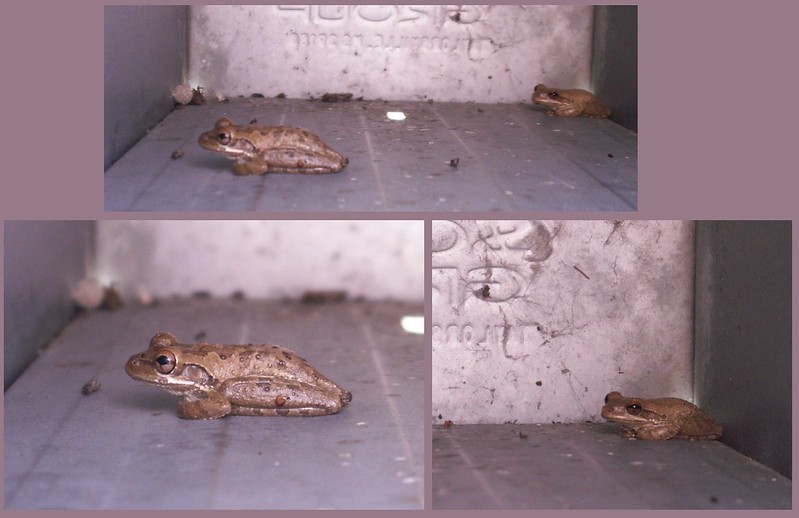
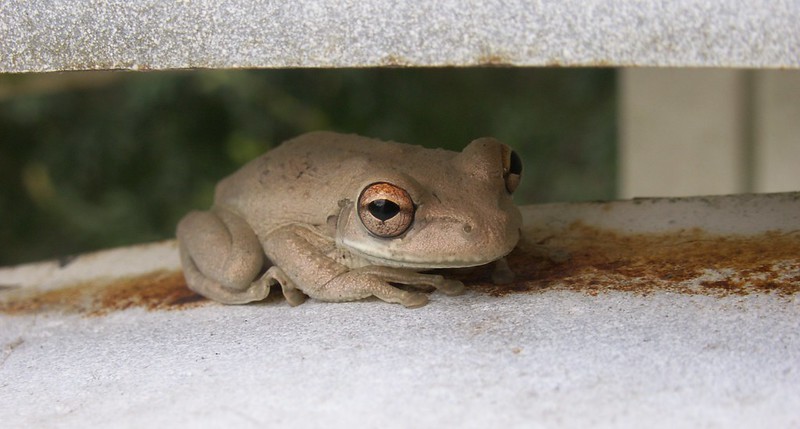
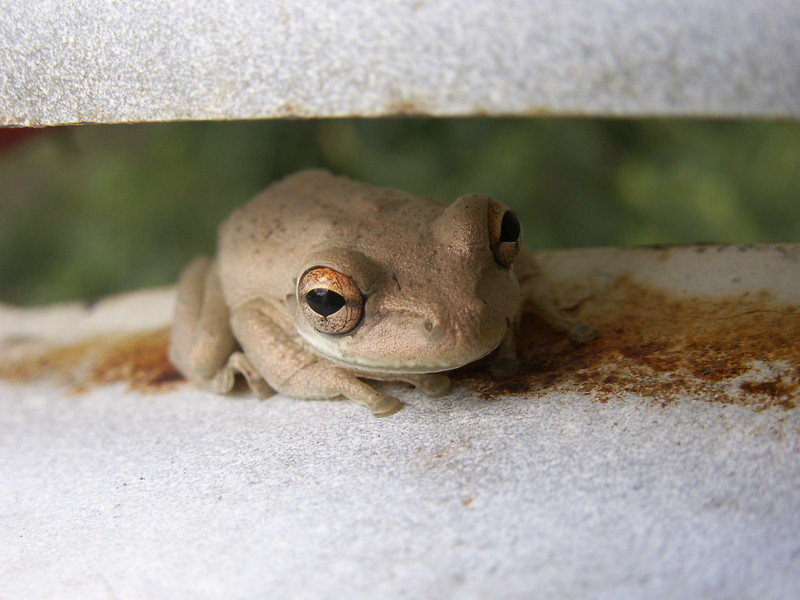
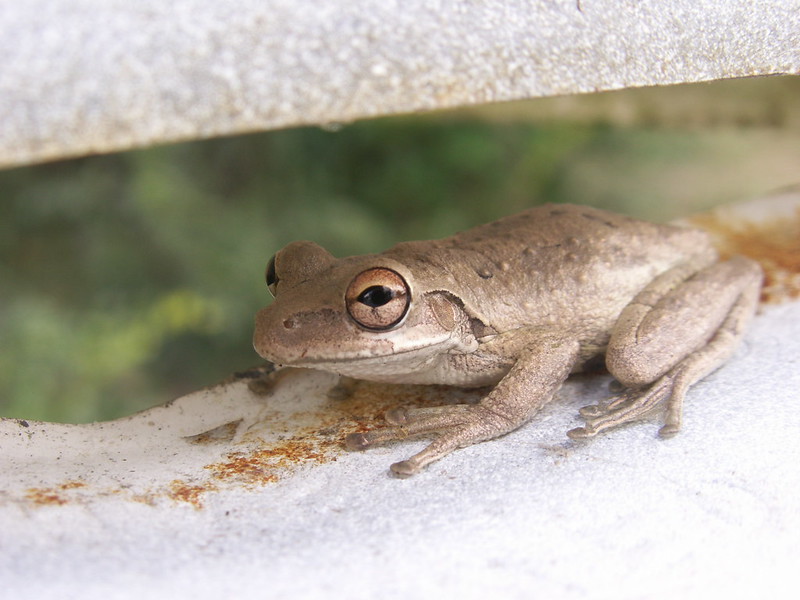
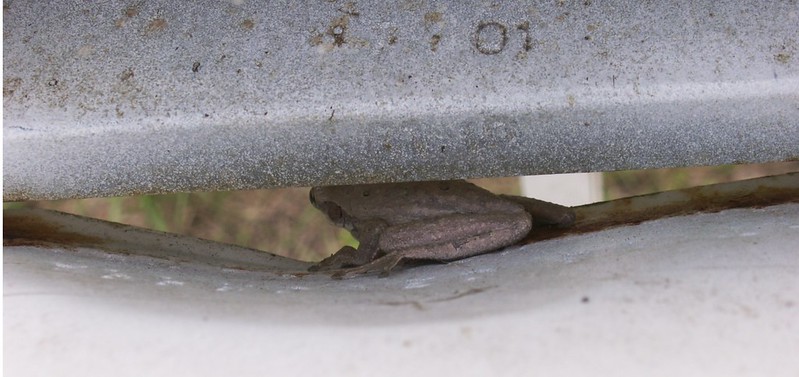
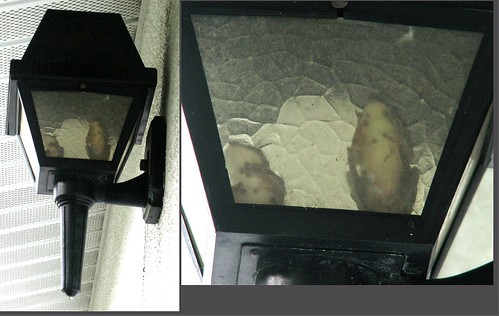
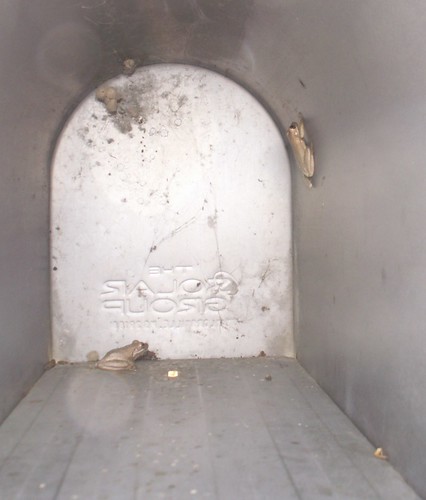
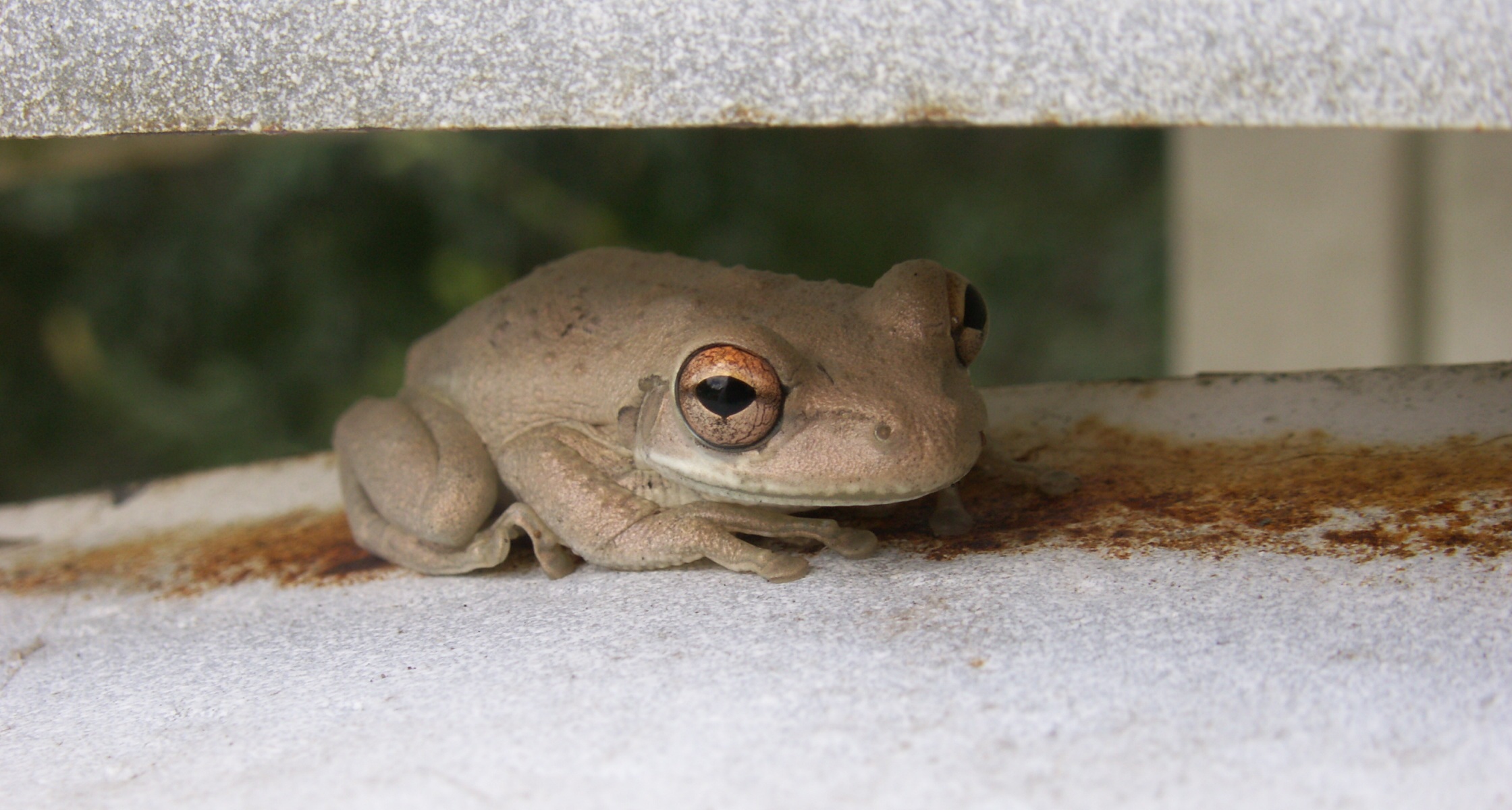
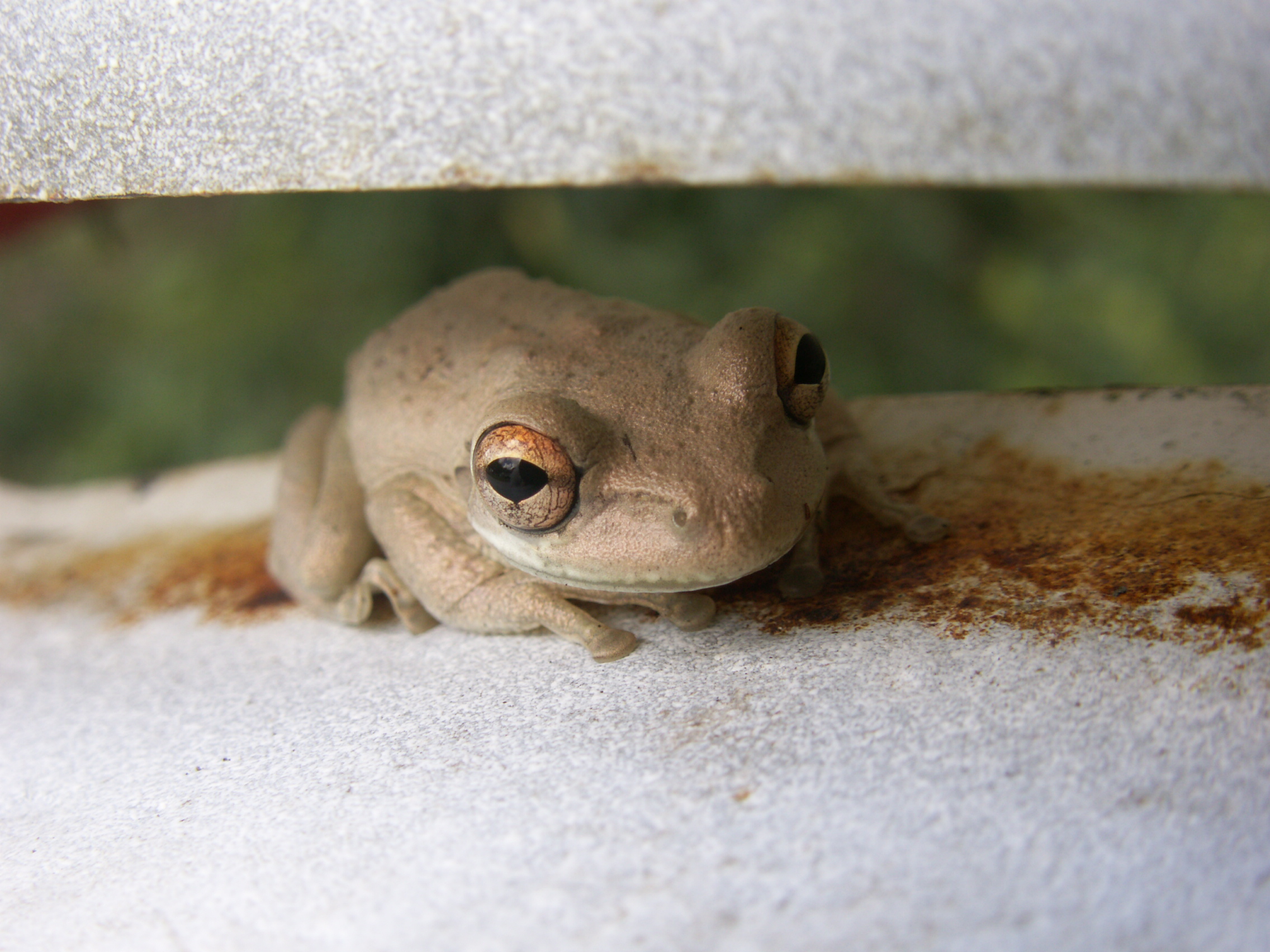
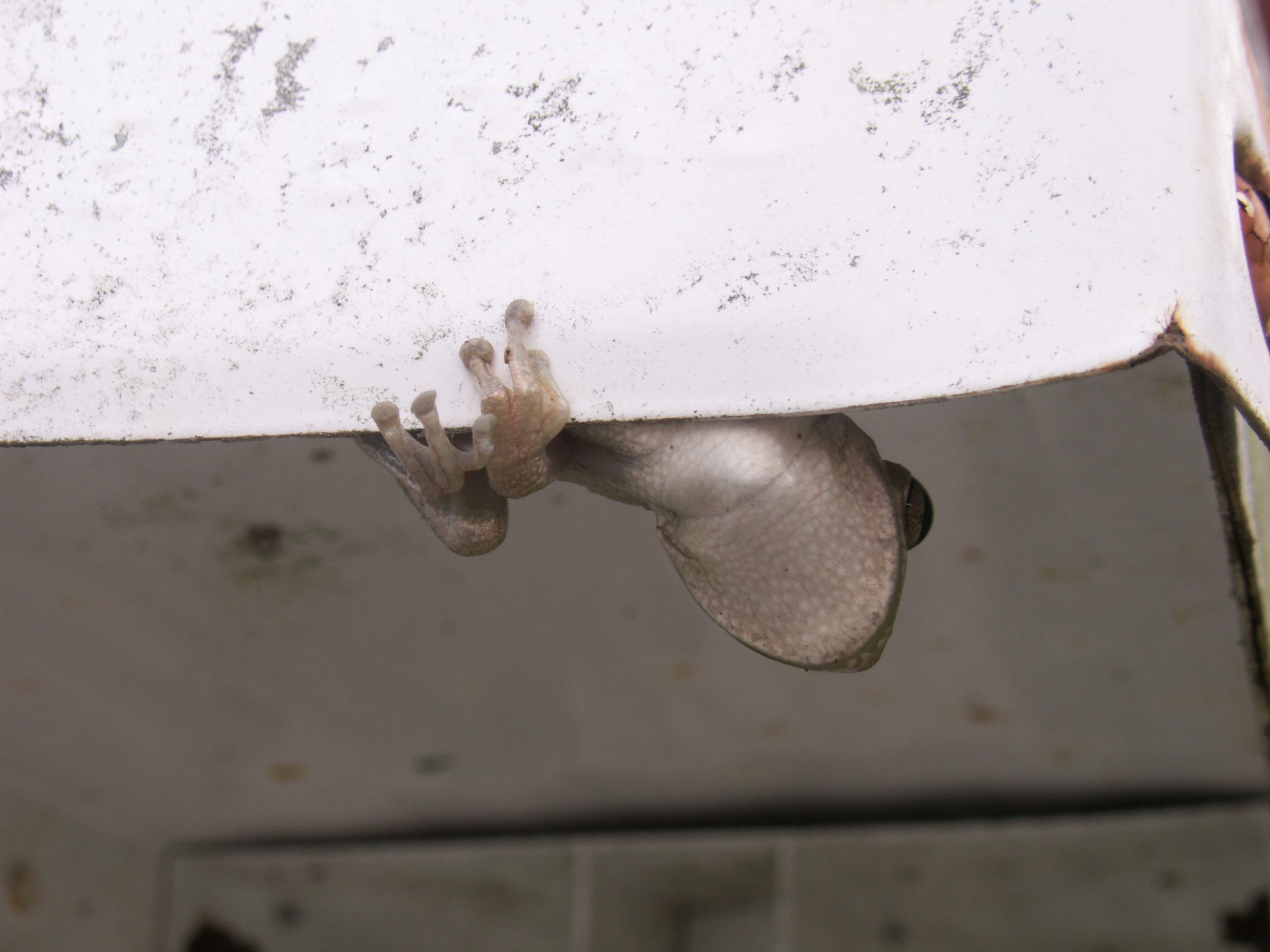
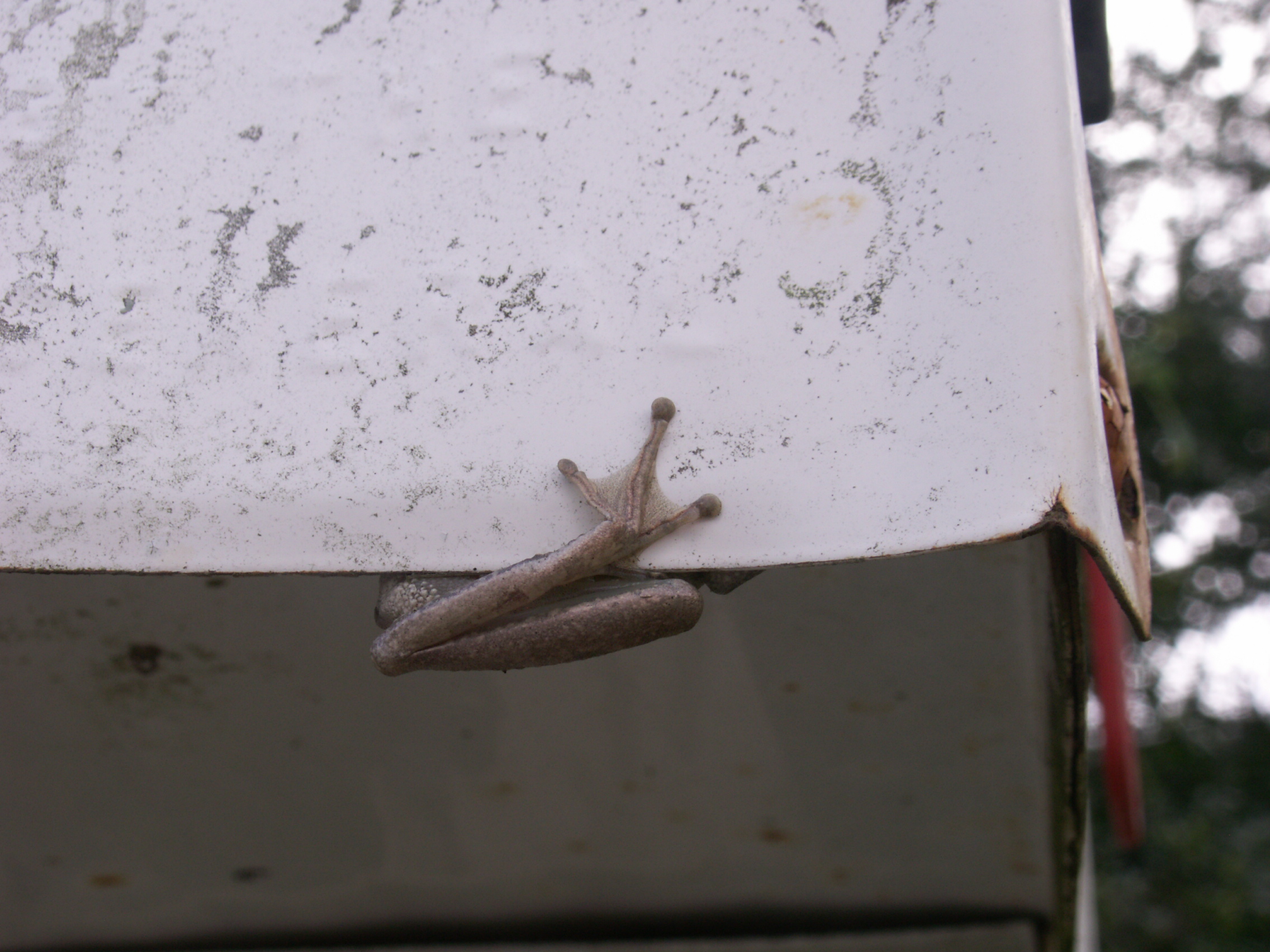
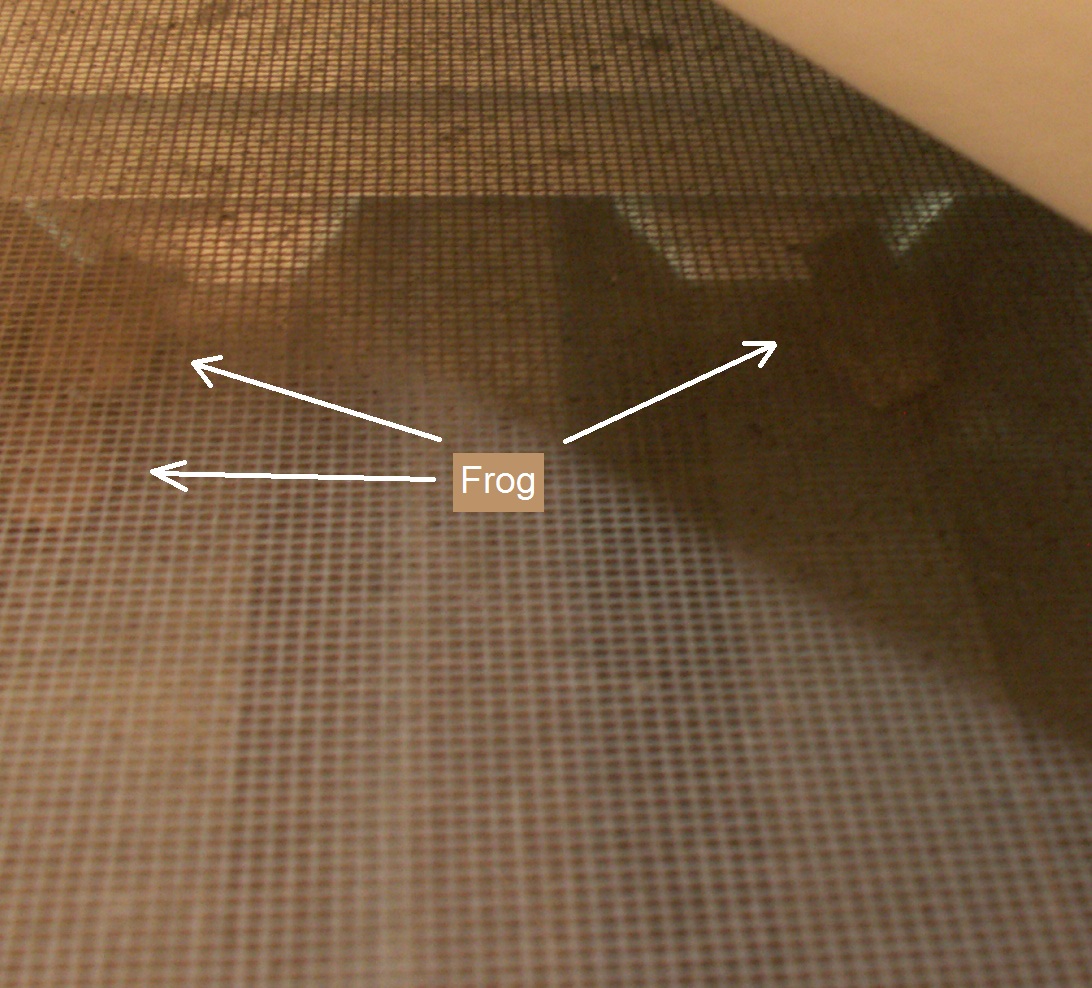
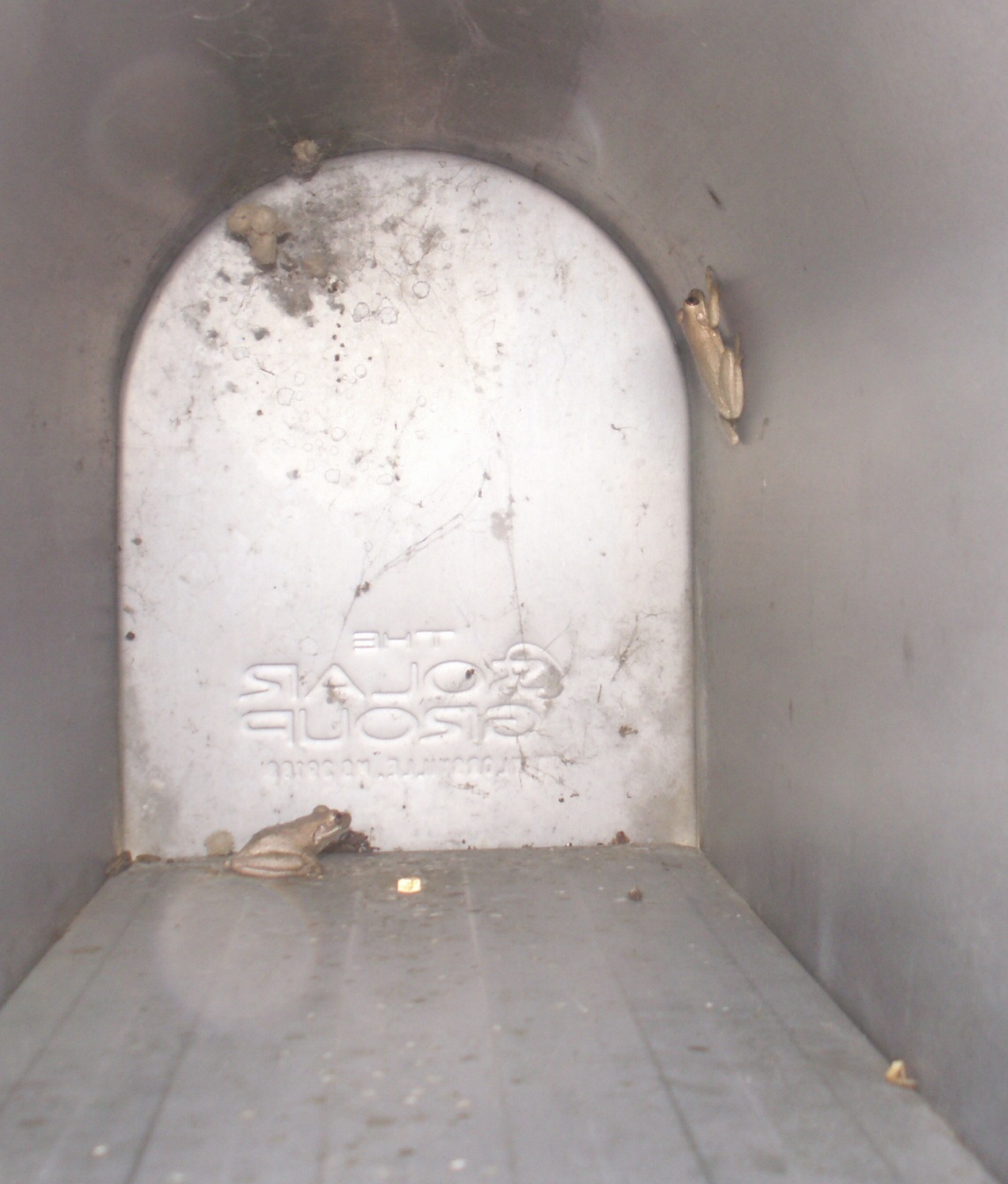
A few nights later I bumped into amphibians hanging out at the post office. Doing some photo catch-up here.
I think this is either a green treefrog or a squirrel treefrog. The frog at lower right is the same individual as in the other shots; I lightened the photo considerably to bring out the contrast.
I found these links to creative writing prompts courtesy of Tiel Aisha Ansari, whose blog Knocking From Inside also includes many links to poetry and other resources. I found her site and her excellent story Slow Dawn via Sunday Scribblings.
Three Word Wednesday
Maintained by Bone, who writes, "Each week, I will post three (or more) random words. Your mission, should you choose to accept it, is to write something using all of those words. It can be a few lines, a story, a poem, anything. I'll also attempt to write something using the same words."
-----------------------
The following three writing prompt sites are brought to you by Write Stuff:
Bright Stuff [Fiction] Friday Creative Carnival
-----------------------
Haiku: One Deep Breath
-----------------------
Poetry Thursday Note: This meme will be discontinuing: "A new group site involving a number of Poetry Thursday participants is in the works. More details on this project will be forthcoming in the final post on this site."
-----------------------
Ringing of the Bards: A Poetry Carnival
-----------------------
Sunday Scribblings
-----------------------
Poetsaurus.com, a poetry search engine and database. Includes more poetry links.
Poets Who Blog: "Link to this blog and get a link back."